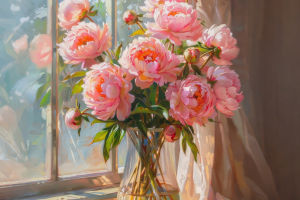
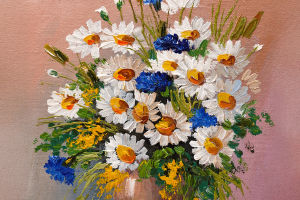
The first time you watch sunlight illuminate a vase of fresh blooms, it's easy to feel inspired to capture that brilliance on canvas.
Oil painting offers a unique way to bring flowers to life, combining rich textures, vibrant colors, and subtle shading. Learning the right approach can transform a simple still life into a compelling floral composition that communicates mood, depth, and realism.
Choosing the Right Materials
The foundation of any successful oil painting lies in selecting materials that complement your style and subject.
Essential items:
Quality paints: Opt for artist-grade oils to ensure rich pigmentation and smooth blending. Colors like cadmium red, ultramarine blue, and titanium white are essential for floral work.
Brushes: Use a combination of round and filbert brushes for petals and leaves. A fan brush works well for soft textures and delicate blending.
Canvas or panel: Linen canvases hold texture beautifully, while primed wood panels allow finer details. Choosing the right surface affects the final appearance and paint behavior.
For example, using a small filbert brush on a primed panel lets you capture the subtle curves of a tulip petal with precision.
Sketching and Composition
Before applying paint, planning the composition helps balance the visual flow and ensures every bloom has its place.
Steps to organize your painting:
Light pencil sketch: Outline the main flower shapes and leaf arrangements, focusing on proportion rather than detail.
Establish focal points: Decide which flowers will draw attention. Usually, a larger or more vibrant bloom anchors the composition.
Consider negative space: Leaves and background areas are just as important for balance. Empty spaces can make the colors pop and prevent clutter.
An actionable example: place a central rose in the foreground with smaller buds diagonally, guiding the viewer's eye naturally across the canvas.
Layering and Color Blending
Oil paints' slow drying time makes layering and blending one of the most powerful techniques for realistic floral effects.
Techniques to try:
Underpainting: Start with a thin layer of a muted color to define shadows and highlights. This serves as a base for depth.
Glazing: Apply thin, transparent layers of color to create luminous petals. Red over a yellow underlayer, for example, can give a glowing effect.
Wet-on-wet blending: Smooth transitions between colors while paint is still wet, ideal for soft petal edges or subtle gradients.
For instance, when painting a rose, blend pinks and whites with gentle circular motions to mimic the natural curl of petals.
Capturing Light and Shadow
The illusion of volume comes from observing how light interacts with petals and leaves.
Tips to enhance realism:
Highlight placement: Identify where light strikes each flower. Use lighter pigments sparingly to create shimmer.
Shadow depth: Introduce cooler or darker tones beneath petals and leaves to emphasize form.
Reflective color: Consider how nearby flowers influence one another's color. A yellow bloom can reflect a subtle glow onto adjacent petals.
An actionable step: on a sunflower, add soft shadows between overlapping petals and tiny highlights along edges to make it look three-dimensional.
Finishing Touches
The final stage defines polish and cohesion in your painting.
Finishing strategies:
Fine details: Use a tiny brush for veins in leaves or delicate pollen textures.
Edge refinement: Soften edges of distant blooms for depth, sharpen edges in focal flowers for emphasis.
Varnishing: After drying, a clear varnish protects the painting and enhances vibrancy.
For example, after painting a bouquet, softening background flowers while keeping the main bloom crisp gives a professional, layered look.
Experimenting with oil painting flowers is as much about observation as it is technique. Watching how petals overlap, how colors shift in sunlight, and how shadows define form can deepen your skill and your appreciation for natural beauty. With each brushstroke, you don't just recreate a flower—you interpret its life, movement, and presence on canvas. The next time you sit before a vase of blooms, remember that patience, practice, and attention to detail will turn a simple arrangement into a lasting work of art.