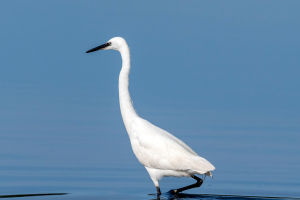
Across calm wetlands and shallow water areas, a slender bird with long red legs often catches our attention. Its sharp black and white feathers and elegant posture make it easy to recognize.
The Black-winged Stilt lives closely with water environments and plays an important role in nature. In this article, we look at its appearance, habits, migration, and value to ecosystems in clear and simple words.
Unique Body Shape and Stunning Appearance
The Black-winged Stilt has a slender body and extremely long legs. Its body length is usually around 35 to 40 cm, while its legs can reach about 20 cm or more. The long legs allow it to walk easily in shallow water and soft mud without sinking. This physical design gives it strong adaptability in wetland environments.
Its feathers show a clear contrast. The back and wings appear black and shiny, while the belly is bright white. The beak is thin, straight, and pointed. The most attractive feature is the red legs that stand out against the black and white feathers. From a distance, it looks like a dancer wearing bright shoes. The color pattern is not only beautiful but also helpful for survival. The dark feathers help reduce visibility in shadows, and the white parts blend with light reflection on water.
How It Finds Food in Wetlands?
We often see this bird walking slowly through shallow water. It follows a simple feeding rhythm: step, stop, and peck. This movement looks like a calm dance. It uses its long beak to pick up small animals from mud and water.
Its diet mainly includes insects, small crustaceans, worms, and tiny aquatic creatures. The beak works like a precise tool that can quickly capture prey. When food is abundant, it feeds steadily. When food is scarce, it moves to another area. This flexible behavior helps it survive in changing environments.
Young birds learn fast. Soon after hatching, chicks can walk and search for food with guidance from their parents. Early independence increases their survival chances in nature.
Migration and Seasonal Movement
The Black-winged Stilt is a migratory species in many regions. Some populations travel long distances between breeding grounds and wintering areas. In warmer seasons, they breed in suitable wetlands. When temperatures drop, they move to milder regions to find food and shelter.
During migration, they stop at wetlands, salt fields, lakes, or rice fields to rest and refuel. These stopover sites are essential for energy recovery. If these habitats disappear, migration becomes more difficult. Protecting resting areas is just as important as protecting breeding sites.
Social Life and Breeding Behavior
We often observe them gathering in small or large groups. Living together improves safety. When one bird notices danger, it alerts the group quickly. Group living reduces the risk of predators and increases feeding efficiency.
During the breeding season, pairs form strong bonds. Males perform special displays to attract females. They may spread their wings, raise their legs, or make soft calls. These actions look like a graceful performance on water. After pairing, they build simple nests near water. Both parents share the duty of protecting eggs and caring for chicks. Cooperation strengthens the success of reproduction.
Ecological Importance and Habitat Protection
This species plays a key role in wetland ecosystems. By feeding on insects and small animals, it helps control population balance. At the same time, it becomes part of the food chain for larger wildlife. Such connections keep nature stable and active.
Wetlands provide clean water, food resources, and safe nesting sites. However, habitat loss and pollution can affect bird populations. When wetlands are protected and managed well, this bird can thrive. Conservation efforts benefit not only wildlife but also human communities that depend on healthy ecosystems.
Let Us Protect Their Dancing Ground Together
We have explored the beauty and importance of the Black-winged Stilt. Its long red legs, elegant movements, and strong adaptability make it a true wetland dancer. It connects migration routes, ecosystems, and biodiversity in meaningful ways.
Dear Lykkers, next time we visit a wetland, let us slow down and observe carefully. Maybe we will see this graceful bird stepping lightly on water. Protecting its habitat means protecting natural balance for future generations.
Let us care for nature together and keep these beautiful birds flying across healthy wetlands for years to come.