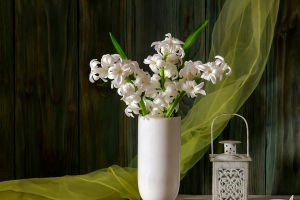
As the days lengthen and the earth warms, one of the most charming signs of early spring is the emergence of grape hyacinths — delicate bulbs that burst forth with clusters of bell shaped flowers.
Among them, the White Grape Hyacinth stands out for its pure, pearl like blooms that bring a soft elegance to gardens and borders. Unlike the more commonly seen blue grape hyacinths, this white variety adds a luminous contrast to spring landscapes and is celebrated for its easy to grow nature and garden versatility.
Botanical Identity and Traits
White Grape Hyacinth refers to cultivars of Muscari, particularly the white flowering forms of Muscari armeniacum or related species. These plants are small perennial bulbs that typically reach 10–20 cm in height, producing tight clusters of tiny, urn shaped white flowers that resemble bunches of grapes. Their foliage emerges in early spring and fades quietly after blooming, allowing other spring blooms to shine.
The name Muscari has ancient roots and often refers to the musky scent associated with many grape hyacinth varieties, hinting at their subtle, aromatic charm.
Ideal Growing Conditions
Successful cultivation of White Grape Hyacinth begins with understanding its preferred environment and simple care needs. These bulbs thrive in conditions that many gardeners can easily provide:
Key growth factors include:
1. Sunlight Exposure: Full sun to partial shade locations allow the plants to develop strong blooms without scorching their delicate flowers.
2. Soil Requirements: Well drained soil that's fertile and slightly moist supports healthy bulb development. Avoid waterlogged sites to prevent bulb rot.
3. Planting Time: For best results, bulbs should be planted in the autumn, allowing them to establish roots before winter dormancy and burst into bloom in spring.
These conditions mimic the plant's natural Mediterranean origins, where bulbs lie dormant through dry summers and awaken with winter rains.
Planting and Maintenance Tips
White Grape Hyacinths are widely appreciated for their ease of care, making them suitable for beginner and experienced gardeners alike. To give them the best start:
• Space bulbs a few inches apart in the soil and plant them at a depth roughly three times their own height.
• Water moderately during active growth, and reduce watering once the foliage begins to die back.
• After flowers fade, allow the green foliage to remain until it yellows naturally; this helps replenish bulb energy for the next season.
Planted in groups, these bulbs can naturalize — spreading gradually over years to create breathtaking carpets of white each spring.
Design Uses in the Garden
White Grape Hyacinth is versatile in landscape settings. Their compact size and pure hue make them ideal for:
• Rock gardens and borders where their bright white blossoms contrast with greenery and other spring colors.
• Containers and patio pots to bring early spring blooms closer to outdoor living spaces.
• Underplantings beneath shrubs and trees where early spring light reaches the bulbs before larger plants leaf out.
Their cheerful appearance makes them excellent complements to tulips, daffodils, and other seasonal bulbs, enhancing layered garden displays.
Reflections on Cultivating Beauty
The White Grape Hyacinth teaches an important lesson for gardeners and nature lovers alike: beauty often lies in simplicity. With minimal care and thoughtful placement, this modest bulb rewards patience with stunning, pristine blooms that brighten early spring landscapes. Its ability to naturalize and return year after year also reminds us that nature's quiet resilience yields beauty that transcends seasons. As you plan your garden, consider how these delicate white flowers can serve not only as visual delight but also as a reminder of nature's cycles and the quiet joy of nurturing life from the soil.